Abstract: Constructing water supply pipes across navigable waterways is a major challenge and one of the most critical aspects of the project. As an underwater construction method, the immersed tube technique is widely used because it minimizes interference with navigation and adapts well to complex hydrological conditions. However, the application of the immersed tube method is subject to constraints imposed by hydrogeological conditions, environmental factors, and procedural complexity. Consequently, a systematic framework is required to resolve critical challenges, including high-precision tube immersion, structural waterproofing, and foundation treatment. Using an urban water supply project as a case study, this paper systematically presents the construction workflow of the immersed tube method and examines the associated construction techniques in detail. The aim is to provide technical guidance for similar projects and to support the continued advancement of immersed tube construction technology.
As a highly efficient technique for underwater crossing construction, the immersed tube method has been extensively applied in cross-sea bridge projects, urban metro systems, and water conservancy works. Based on the underwater installation of prefabricated tube segments, this method provides notable advantages, including minimal interference with shipping traffic, excellent adaptability to complex hydrogeological conditions, and comparatively short construction durations. Nevertheless, immersed tube construction comprises a series of complex stages, including prefabrication, float-out and transportation, immersion, and jointing, each of which entails stringent technical requirements and considerable construction challenges. These technical challenges not only determine the ultimate success or failure of the project but also directly affect construction costs, project schedules, and long-term operational safety. Taking an urban water supply project as a case study, this paper provides a systematic analysis of critical technologies in immersed tube construction, serving as a reference for similar engineering practices.
The water supply pipeline in this urban project has a total length of 4.83 km. It is designed for a flow rate of 7.74 m³/s, with an operating pressure of 0.22 MPa and a design pressure of 0.40 MPa. The pipeline consists of PCCP (prestressed concrete cylinder pipe) and steel pipe sections, has a nominal diameter (DN) of 1800 mm, and is configured as a dual-pipe system. The section of pipeline crossing the main navigable waterway channel was constructed using the immersed tube method. The immersed tube section comprises two parallel DN1800 pressure steel pipes (Pipe A and Pipe B), oriented perpendicular to the river flow and spaced 8.0 m apart (center-to-center). Fabricated from Q235B spiral-welded steel with a wall thickness of 22 mm, the immersed tube section spans 212.6 m. The pipeline has a design centerline elevation of 13.00 m and a trench bottom elevation of 12.10 m, with an underwater excavation depth of approximately 6 m.
In the section crossing the Shake River, the pipeline is buried at a depth of approximately 3.0 m. The strata involved include Layer ②-1 (light silty loam), Layer ②-2 (medium to heavy silty loam), and Layer ④ (light silty loam). Layer ②-2 is in a plastic state with low permeability, while Layers ②-1 and ④ range from loose to slightly dense and exhibit low to moderate permeability.
Based on the hydrogeological conditions and shipping traffic at the project site, and considering the surrounding environment, technical requirements, and construction methods, the immersed tube construction process primarily includes steel pipe welding, underwater earth excavation, underwater bedding layer placement, steel pipe hoisting and launching, water ballasting and sinking, underwater anchor block casting, underwater earth backfilling, and underwater rock backfilling.
(1) The construction site layout shall follow the principles of efficient land use, operational convenience, and ease of management. Functional zones shall be clearly separated to ensure compliance with safety and environmental protection requirements.
(2) The construction site layout shall be rational, with construction machinery and materials arranged in accordance with the site plan to ensure efficient allocation and just-in-time utilization (i.e., materials are used immediately upon delivery).
(3) Temporary fencing shall be installed around the perimeter of the construction site to enable fully enclosed site management. The fencing shall be 1.8 m high and feature a uniform color with a neat and visually organized appearance.
(4) Considering the large diameter, long span, and substantial weight of the steel pipes, and in view of site conditions, the steel pipe assembly platform and launching facility shall be located on the right-bank floodplain. These facilities shall be aligned with the direction of water flow, forming an angle of 30° with the shoreline. The assembly platform site features flat terrain, which facilitates the launching of the steel pipes into the water.
(5) Both the on-site steel pipe welding and fabrication area and the launching facility shall be hardened with concrete. Temporary access roads shall be planned in coordination with the existing topography, landforms, and on-site facilities, making full use of existing roadways. Materials and mechanical equipment shall primarily enter the construction zone via the embankment road on the southern bank of the Shaying River, while the northern bank shall utilize existing access roads for auxiliary transportation. Construction access roads within the PCCP pipeline work zone provide access to the main construction area. Drainage ditches shall be constructed along one side of these roads and connected to the local drainage network. The bottom width and depth of these ditches shall be not less than 0.3 m to ensure that the roadbed is protected from rainwater saturation. Where temporary access roads cross existing ditches or low-lying areas, concrete culverts shall be installed, based on site-specific conditions, to maintain the integrity of the existing drainage system. A dedicated personnel member shall be assigned to maintain the access roads, including regular sweeping, watering, and dust suppression, to ensure the unimpeded passage of transport vehicles. The drainage ditches along the access roads shall be cleaned promptly to ensure effective drainage.
(1) Anti-corrosion coating of the pipe materials shall be completed within the workshop. Prior to applying the coating, all contaminants must be thoroughly removed from the steel surfaces. The steel pipe surfaces must achieve a rust-removal grade of Sa2.5, with a surface roughness (Rz) falling within the range of 40 to 70 µm.
(2) Internal anti-corrosion protection for the pipeline shall utilize a heat-bondable epoxy resin. The epoxy resin powder is uniformly delivered into the interior of the pipe—typically via pneumatic conveying or vacuum suction methods—where it melts and adheres to the inner wall. The average thickness of this internal coating must be no less than 450 µm; the use of liquid epoxy as a substitute for epoxy powder for internal anti-corrosion processing is strictly prohibited. The material used for the internal anti-corrosion layer must be an epoxy resin powder that meets all sanitary standards for potable water applications.
(3) External anti-corrosion protection for the pipeline shall consist of a 3PE (three-layer polyethylene) wrapping system. This involves applying a three-layer polyethylene anti-corrosion structure; the external coating shall be applied to a "normal grade" thickness, with an average coating thickness of ≥ 3.3 mm.
(4) A 100 mm section at each pipe end shall be left uncoated (reserved) to accommodate field welding. Following the completion of on-site welding, the weld seams—as well as any areas where the surface coating has been damaged—shall undergo anti-corrosion coating treatment directly at the construction site.
(1) Assembly and Welding Platform Layout: To ensure the progress and quality of steel pipe welding operations, the onshore welding platform shall be leveled prior to the commencement of work. A 20 cm-thick layer of C25 concrete shall then be cast over a width of 5 m to ensure that the ground flatness meets the requirements for welding operations. Pipe sections are transported to the site by vehicles, after which a crane is used to place the pre-corrosion-treated pipes onto the welding platform. A working pit measuring 1.2 m in width and 1.5 m in depth shall be excavated at each weld joint to provide sufficient operational space for welding activities.
(2) Steel Pipe Welding: Steel pipe welding is carried out on the onshore assembly and welding platform. A crane is used to align pipe sections for butt welding, and the joints are welded sequentially until the full steel pipe assembly is completed at the shoreline. Prior to welding, a visual inspection of the weld joint shall be conducted, and any debris or contaminants within a specified area on both sides of the weld face shall be thoroughly removed. Upon completion of each weld pass, the joint shall be immediately cleaned and inspected to verify dimensions, bevel geometry, and tack weld quality. Any defects in the tack welds—such as cracks, porosity, or slag inclusions—shall be completely removed before welding operations are allowed to proceed. The weld joint adopts a single-sided V-groove (external bevel) configuration, with the primary weld bead located on the outer pipe surface. The welding process employs semi-automatic CO₂ gas-shielded welding.
(3) Steel Pipe Welding Quality Inspection: All steel pipe weld joints shall be subject to visual inspection and shall be free of defects such as slag inclusions and porosity. If any such defects are identified, repair welding shall be carried out. Non-destructive testing (NDT), as the subsequent inspection stage, shall only commence after the visual inspection has been successfully passed. Specifically, pipe sections in the submerged segment shall undergo 100% ultrasonic testing and 100% radiographic testing.
A grab dredger shall be used for underwater excavation. The excavated sediment is loaded onto bottom-dump barges, with part transported to a designated disposal area and the remainder delivered to the shoreline. After dewatering and drying, the remaining soil is loaded onto trucks and transported to a designated spoil disposal site. Prior to the commencement of excavation, control points shall be established 200 m upstream and 200 m downstream of the construction zone. A warning zone shall be established within the designated area, marked by red-and-white buoys equipped with warning lights on the water surface, to ensure safe navigation and construction operations. During pipeline trench excavation, GPS equipment shall be used to accurately locate the trench edge lines and centerline, with corresponding buoy markers placed on the water surface. Conspicuously colored buoys shall be deployed along the trench edge lines at 30 m intervals and anchored at designated positions using heavy concrete sinkers to ensure stability against water level fluctuations, wind, and wave action. The coordinates of all buoys shall be re-surveyed every seven days. If any displacement is detected, immediate adjustments shall be made to prevent deviation of the trench excavation from the design centerline.
Once the first steel pipe is fully afloat, it shall be towed upstream within the river channel using tugboats and temporarily secured with concrete ground anchors and steel wire ropes. Welding of the second pipe segment may then commence. As the pipe segments float on the water surface, they are highly susceptible to environmental influences. During flotation transport, the pipeline is affected by water currents, which may cause bending or deformation. In light of these factors, continuous monitoring and observation shall be conducted before and during construction, and timely communication with construction personnel shall be maintained to facilitate appropriate adjustments to construction measures as needed.
The steel pipe shall be submerged using the “integral lifting and sinking” method. A total of five lifting points shall be established: one crane shall be positioned on the riverbank at each end of the steel pipe, and three crane vessels shall be deployed within the river channel to control the overall lowering rate of the pipe. Lifting points shall be strategically positioned based on site conditions to ensure the overall balance and stability of the pipeline during both lifting and sinking operations. Steel wire ropes shall be used for lifting operations, and protective sleeves shall be installed to improve their durability and wear resistance.
During the steel pipe submergence process, the alignment of the pipe centerline shall be monitored in real time. Any deviation shall be corrected immediately to ensure that the pipeline is lowered accurately to its design position. Uneven descent, which may induce excessive stress in the steel pipe, shall be avoided during the submergence process. This is achieved by controlling the rates of water intake and air venting, and by using lifting forces to regulate the pipeline descent speed, thereby ensuring uniform lowering. Furthermore, the lifting equipment shall be controlled to lower the pipeline in increments of approximately 0.3 m.
To ensure the quality and safety of underwater concrete anchor block placement, a modular steel formwork system is used. The formwork is fabricated from welded steel plates and features pre-cut semi-circular openings on both sides, allowing it to be securely fastened to the steel pipe during pouring. Upon completion of anchor block casting, the steel formwork shall remain in place on the riverbed. After assembly, positioning cables shall be installed around the perimeter, and the formwork shall be guided into its designated position and secured with bolts. The end-closure formwork shall be assembled underwater, and any external gaps shall be sealed by divers. The layout of the underwater anchor block formwork is shown in Figure 1. The underwater anchor blocks shall be constructed using C25 plain concrete, placed via a tremie pipe until the structure is fully formed and hardened. The concrete placement shall be carried out continuously. Prior to concrete placement, the bottom of the tremie pipe shall be sealed. The self-weight of the concrete is then used to open the seal plug, thereby ensuring proper density and compaction.
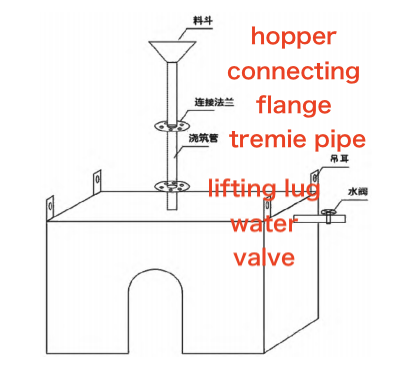
Figure 1 Schematic Diagram of Underwater Anchor Block Formwork
Upon completion of concrete anchor block casting, underwater earth backfilling shall commence. The backfill material for the underwater trench shall consist of soil excavated from the original trench. If the excavated soil does not meet the specified requirements, backfill material shall be obtained from a designated borrow pit. The underwater trench backfilling operation shall be carried out using a dredger in conjunction with a bottom-dump barge. For the riverbank sections on both sides, plain soil from a borrow pit shall be used for backfilling. The soil shall be loaded onto trucks by excavators, transported to the riverbank, transferred onto bottom-dump barges, and used for backfilling. The river slopes shall be restored to their original contours.
Once plain soil backfilling around the pipeline is complete, pre-loaded rock blocks shall be transported by bottom-dump barge to the designated underwater trench and dumped in place. During rock dumping, construction personnel shall periodically inspect placement quality to prevent over-dumping, which would increase the workload for divers. Divers shall conduct on-site inspections to ensure that the rock layer is uniformly and levelly distributed before subsequent backfilling operations proceed. The construction vessel shall ensure that rock backfilling within the trench is uniform; any missed areas shall be promptly filled, and the thickness of the rock cover above the steel pipe trench shall be not less than 1.5 m.
Once rock backfilling reaches the design elevation, soil shall be retrieved from the designated stockpile area and placed in accordance with the pipeline alignment markers, ensuring that the backfill is restored to the original riverbed elevation. Upon completion of this backfilling stage, professional divers shall descend to conduct an inspection.
The hydrostatic test shall be conducted after the steel pipe has been submerged and soaked for a minimum of 24 hours. Prior to filling the pipe with water, any temporary supports, lifting equipment, or other restraints attached to the steel pipe shall be released. Additionally, any weld scars or scratches on the pipe wall shall be ground smooth and repaired. During the water filling process, an air vent valve shall be installed at the highest point of the pipeline to ensure that all air is fully expelled prior to pressurization. Pressurization shall be conducted in stages, with a pressurization rate not exceeding 0.05 MPa/min. The pressure shall be increased gradually to the specified working pressure and maintained for a minimum of 30 minutes, during which the steel pipe shall be inspected. Pressurization may proceed only if all conditions are confirmed to be normal. The pressure is then gradually increased to the maximum test pressure and maintained for a minimum of 30 minutes, followed by a further inspection of the steel pipe. There shall be no signs of pressure drop or leakage. Finally, the pressure shall be reduced to the working pressure and maintained for a minimum of 30 minutes. Throughout the hydrostatic testing process, the steel pipe shall remain free of any leakage or seepage, and the concrete anchor blocks shall show no signs of cracking or abnormal displacement. Inspection and final acceptance of the pipeline shall proceed only after the hydrostatic test results fully meet all specified requirements.
(1) With the rapid advancement of urban–rural integration, the number of urban and rural water supply projects is steadily increasing, and these projects frequently involve the construction of large-diameter pipelines crossing navigable waterways. The immersed tube method not only significantly minimizes disruption to river navigation and adapts to complex hydrogeological conditions, but also ensures construction quality, shortens the construction period, and reduces labor costs.
(2) The immersed tube method imposes relatively low requirements on foundation bearing capacity and can be widely applied to various types of soft ground foundations. The immersed tube method places relatively low demands on foundation bearing capacity and is widely applicable to various types of soft ground conditions. However, in sections characterized by high flow velocities, unstable current directions, deep riverbed trenches, or steep terrain, the floating, immersion, and docking operations of pipe segments present significant challenges. Furthermore, the construction site shall provide suitable dry-land conditions and a navigable channel that meets the requirements for floating operations, thereby fully leveraging the key advantage of this method: the ability to carry out onshore section construction, trench excavation, and pipe segment prefabrication concurrently.
(3) Construction using the immersed tube method entails inherent risks; therefore, strict safety control measures are essential to ensure construction quality and personnel safety. Through meticulous pre-construction planning, rigorous safety management during execution, and standardized quality acceptance and post-construction maintenance, the risks of construction accidents and environmental pollution can be effectively mitigated, thereby ensuring the safety and reliability of immersed tube construction and promoting its sustainable development.